English| EUR
Suggested for you
More currencies
Choose a language
The volcano that stopped European air traffic in 2010 now carries a snow road to its summit ridge. Reaching that ridge is a two-stage journey: a mountain track by modified vehicle, then a machine ride across the ice cap. This page sets out how the ascent is structured, where it begins, and what governs it.
Quick answer
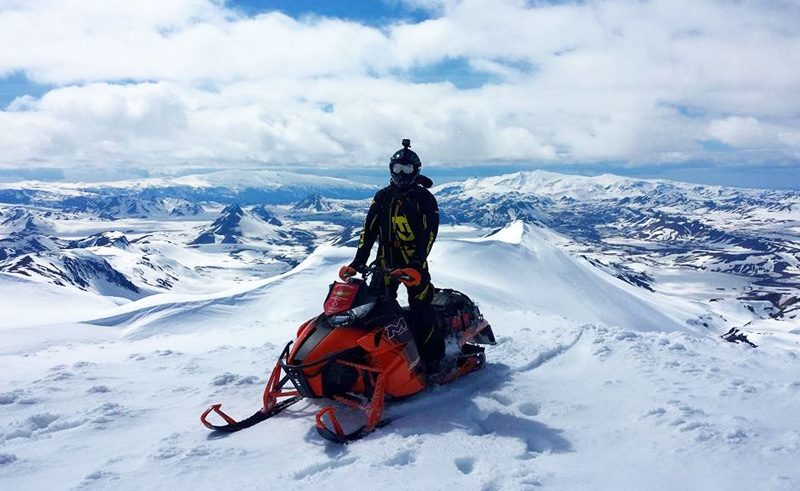
Snowmobiling Eyjafjallajökull glacier starts at Brú on Road 249, South Iceland, where a super-jeep transfer climbs to the glacier edge before riders continue by machine toward the summit plateau. Glacier access itself costs 0 ISK, but the ride requires a commercial tour booking. The route is weather-governed: crevasse conditions and visibility, not the calendar, decide the day's exact line.
Eyjafjallajökull is not one ice cap but a lid — roughly 80 square kilometres of ice sitting inside a summit caldera about 2.5 kilometres across, capping a stratovolcano that has erupted only three times in recorded history. The 2010 eruption melted a hole through that lid and sent meltwater surging down the Markarfljót valley. What remains is a glacier with a legible surface: a broad, tilted snowfield rising from the northern approach toward the crater rim, with Gígjökull and Steinsholtsjökull spilling away below. Snowmobiling Eyjafjallajökull glacier follows that geometry rather than fighting it. The logistics are staged, and this is the part most first-time visitors underestimate. Nobody drives a rental car onto the ice. The staging point at Brú, on Road 249 near Þórsmörk's western approach, sits at the foot of the mountain track, and a modified super-jeep handles the climb to the glacier edge over rough F-road surface. Only there does the snowmobile leg begin. From the edge, guides run a marked line across the firn toward the higher plateau, keeping clear of the crevasse fields that open where the ice bends over subglacial ridges. On a settled day the summit ridge gives sightlines to Mýrdalsjökull, Katla's cover, and south across the coastal plain to the Westman Islands. That sightline is the variable. Cloud sits on the ice cap for long stretches even in summer, and a route that reads as straightforward in clear air becomes a compass-and-GPS exercise in flat light. Guides adjust the turning point accordingly — the summit ridge on a good morning, a lower shelf when the ceiling drops. Riders travel two to a machine unless a single rider is arranged, and an Icelandic driving licence equivalent is required to steer. The practical takeaway is to treat the eyjafjallajökull snowmobile tour as a mountain activity with a fixed departure structure, not a drop-in attraction. The glacier below is open ground with no gate and no fee, but the ride onto it exists only through licensed operators working out of the Brú staging area. Book the machine ride first, then build the rest of the South Coast day around it — Seljalandsfoss and Skógafoss both sit within twenty minutes of the turn-off. Anyone planning snowmobiling Eyjafjallajökull glacier for a specific date should keep a fallback day in reserve, since conditions on Iceland's ice caps rewrite schedules more often than operators cancel them outright.
“Cloud sits on the ice cap for long stretches even in summer, and a route that reads as straightforward in clear air becomes a compass-and-GPS exercise in flat light.”
The best arrival window for snowmobiling on Eyjafjallajökull is 09:00–14:00. This timeframe provides optimal daylight and weather visibility, which are critical for safe glacier transit and clear mountain views.
Short daylight, -5°C to 0°C
Expect limited sunlight hours but stable snow conditions for transit.
Variable visibility, -2°C to 5°C
Longer days facilitate better route navigation and safer glacier access.
Clearer skies, 5°C to 12°C
Extended daylight allows for consistent glacier transit and mountain visibility.
Frequent shifts, 0°C to 7°C
Weather changes quickly, requiring strict adherence to the 09:00–14:00 arrival window.
Verdict: The optimal period is the arrival window of 09:00–14:00 during the shoulder months of April or September for the best balance of daylight and stable weather.
The glacier access remains open daily to accommodate varying tour logistics. Snowmobile tours operate throughout the week, though specific departures depend on professional guide availability and current weather conditions.
Access to Eyjafjallajökull glacier is free of charge. Snowmobiling on the glacier requires a commercial tour booking due to safety and access regulations.
Verdict: While glacier access is 0 ISK, visitors must pay commercial tour operators for snowmobiling services based on selected tour packages.
The starting point for snowmobiling tours on Eyjafjallajökull is located at Brú, Road 249, in South Iceland. Access to this location is exclusively by road, situated inland from the main Ring Road.
Drive Route 1 to Road 249 (Þórsmerkurvegur) towards Brú
Private transfer to Brú, Road 249
Plan your journey to arrive between 09:00 and 14:00 to align with the best daylight and visibility conditions for transit to the glacier summit. Ensure your vehicle is prepared for mountain road conditions before departing for Brú, Road 249.
Snowmobiling on Eyjafjallajökull runs above 1,000 m on exposed ice, so gear and paperwork need sorting before you leave the meeting point at Brú.
Everything you need to know about snowmobiling eyjafjallajökull glacier
While the glacier is a natural landmark, snowmobiling Eyjafjallajökull glacier requires a certain level of physical fitness and ability to follow safety instructions. Participants must adhere to professional guidelines to navigate the icy terrain safely.
Yes, you must book a commercial tour to participate. The glacier itself has free entry, but regulated access is required for motorized activities to protect the environment.
The optimal time for a snowmobile experience is during the best arrival window of 09:00–14:00. This period provides the most consistent daylight and visibility for observing the mountain summit.
Most commercial operators set age limits based on safety regulations and the physical demands of the machine. It is standard for children to require a minimum age or height to ride as a passenger.
The base is located at Brú, Road 249, in South Iceland. Visitors should plan their transport to arrive within the recommended window to ensure they meet their scheduled departure.
Ensure you wear warm, waterproof layers and sturdy footwear appropriate for arctic conditions. Your guide will provide specific safety gear, but dressing in breathable, insulating fabrics is essential for long periods on the ice.